Static vs. Dynamic Websites: Which One Is Right for Your Business?
Choosing the right type of website is one of the most important decisions when establishing your online presence. Whether you’re launching a startup, running a local business, or managing a growing enterprise, your website should align with your business goals, budget, and future plans.
One of the most common questions business owners ask is: Should I choose a static website or a dynamic website?
Both have their advantages, but understanding the differences will help you make a smarter investment.
What Is a Static Website?
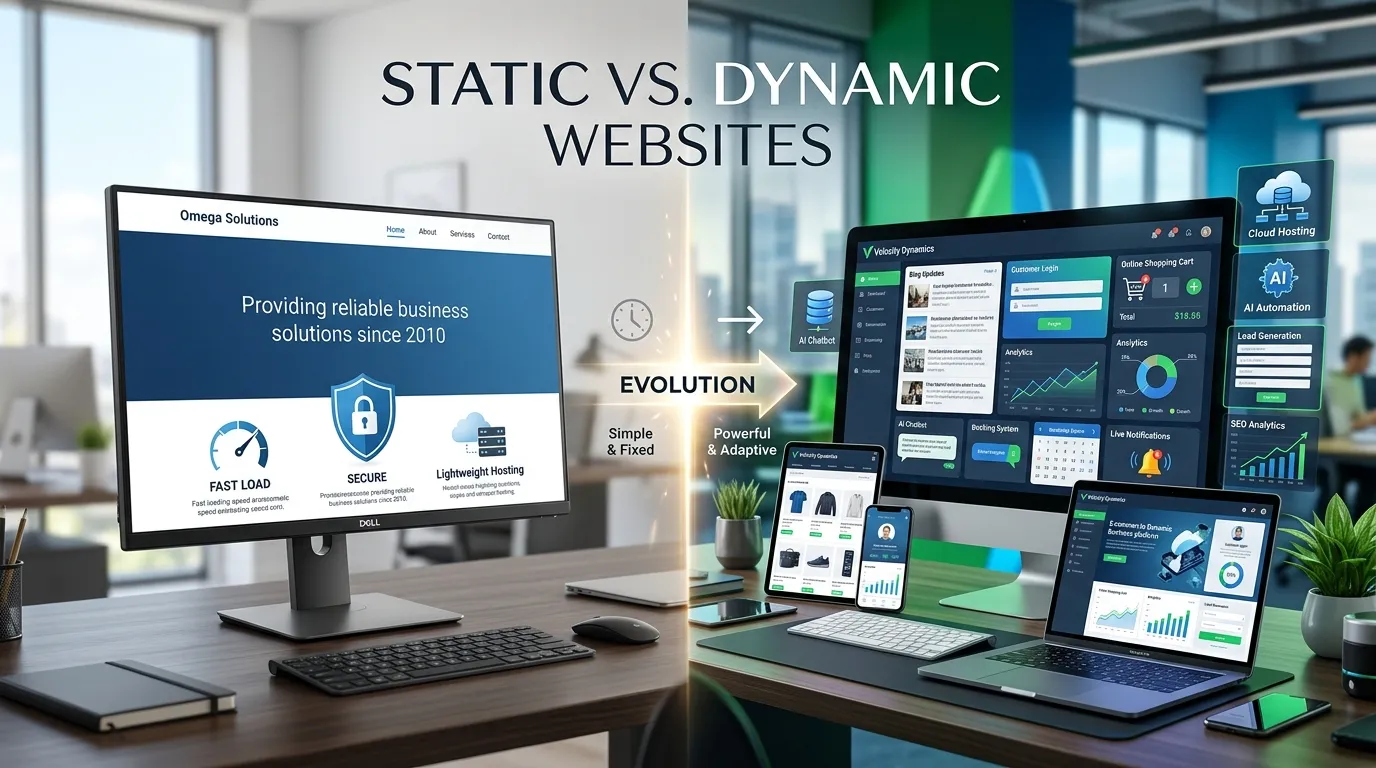
A static website consists of fixed web pages where the content remains the same unless a developer manually updates the files. Every visitor sees the same content, making static websites simple, lightweight, and incredibly fast.
Static websites are ideal for businesses that don’t need frequent updates or advanced functionality.
Benefits of a Static Website
Fast loading speeds
High security due to fewer vulnerabilities
Lower development and hosting costs
Easy to deploy
Excellent performance
Ideal for brochure websites and company profiles
Best For
Small businesses
Portfolio websites
Personal websites
Landing pages
Company profile websites
Event websites
What Is a Dynamic Website?
A dynamic website generates content in real time using a database and server-side programming. Unlike static websites, dynamic websites allow content to change automatically based on user interactions or administrator updates.
Business owners can easily manage content without modifying the website’s code.
Benefits of a Dynamic Website
Easy content management
Scalable for business growth
Interactive user experience
User login and registration
Search functionality
Contact forms and customer portals
Blog management
Product catalogs
E-commerce integration
Customer dashboards
Best For
Corporate businesses
E-commerce stores
Real estate websites
Educational platforms
Healthcare portals
Travel booking websites
News portals
Membership websites
CRM and ERP systems
Static vs. Dynamic Website Comparison
When deciding between the two, consider your business requirements.
A static website offers speed, simplicity, and affordability, making it suitable for businesses that only need to present information online.
A dynamic website, on the other hand, offers flexibility and advanced functionality. If your business expects regular updates, customer interactions, online bookings, or e-commerce capabilities, a dynamic website is the better choice.
Which Website Is Better for SEO?
Both static and dynamic websites can perform well in search engines when properly optimized.
However, dynamic websites provide greater flexibility for implementing SEO strategies because they allow businesses to:
Publish regular blog articles
Update service pages
Add new products
Optimize metadata
Improve internal linking
Create location-specific landing pages
Fresh and regularly updated content is an important factor in improving search engine visibility.
Which Website Is More Secure?
Static websites generally offer better security because they don’t rely on databases or complex backend systems.
Dynamic websites require regular software updates, security patches, and maintenance. However, when developed using modern frameworks and best security practices, they can be highly secure and reliable.
Cost Comparison
Static websites usually require a lower initial investment because they involve fewer technologies and simpler development.
Dynamic websites cost more to build due to additional functionality, database integration, and custom features. However, they provide significantly greater long-term value for businesses planning to grow.
Which Website Should You Choose?
Choose a Static Website if you:
Need a professional online presence
Have a limited budget
Rarely update your content
Want maximum speed and simplicity
Choose a Dynamic Website if you:
Want to generate leads online
Need content updates without coding
Plan to expand your business
Require customer interaction
Need online bookings or payments
Want better long-term scalability
The Nexever Recommendation
For most modern businesses, a dynamic website offers the best long-term return on investment. As your business grows, your website should grow with it.
A scalable website allows you to add new services, publish blogs, integrate AI tools, improve SEO, manage customer inquiries, and even expand into e-commerce without rebuilding your website from scratch.
Rather than choosing a solution based only on today’s needs, think about where your business will be in the next three to five years.
Conclusion
Both static and dynamic websites have their place, and the right choice depends on your business objectives.
If you simply need an online presence, a static website may be sufficient. However, if you want your website to become a powerful marketing and lead-generation tool, a dynamic website is the smarter investment.
The right website isn’t just about technology—it’s about creating opportunities to attract customers, build trust, and support your business growth.
Connect with Nexever Business Solutions
Choosing the right website architecture is just the first step. At Nexever Business Solutions, we design and develop high-performance websites tailored to your business goals.
Whether you need a static website, dynamic website, e-commerce platform, mobile application, AI-powered solution, or custom software, our experienced team delivers scalable, secure, and SEO-friendly digital solutions that help businesses grow.
Ready to build a website that drives results?
Website: nexever.ae
Email: hello@nexever.ae
Alternate Email: info@nexever.ae
Partner with Nexever Business Solutions and transform your ideas into powerful digital experiences.